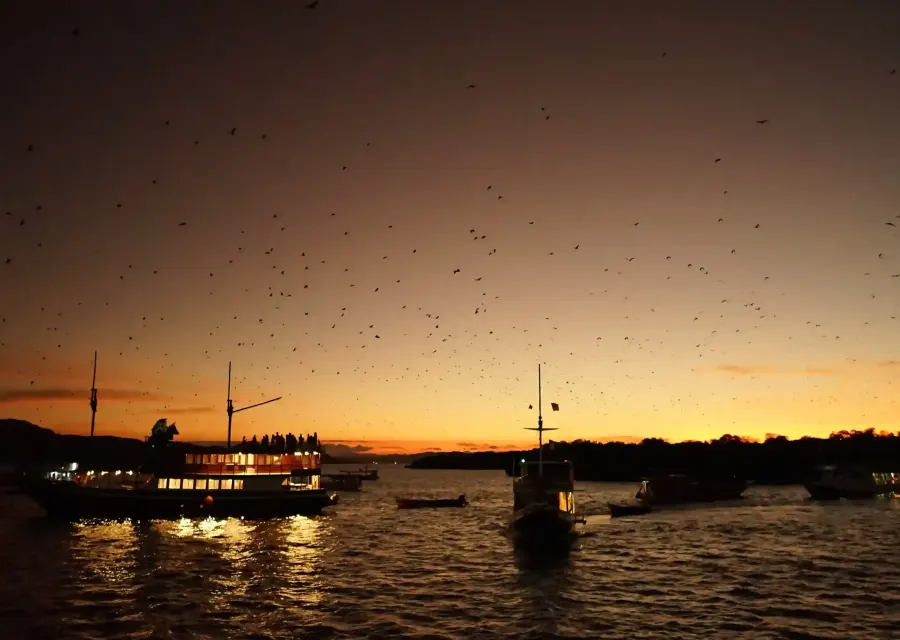
Best Time to Visit Komodo: A Month-by-Month Guide

The best time to visit Komodo is the dry season, from about April to October, with the least rain between June and September. May, June, September and October offer largely dry weather with fewer boats than July and August, while January and February are the wettest months, with frequent strong winds and rough seas. Ayvara’s open trips are scheduled every week of the year, Friday to Sunday and Monday to Wednesday, subject to weather and port clearance.
Best time to visit Komodo: the short version
The best time to visit Komodo National Park is the dry season, from about April to October, with the least rain from June to September. May, June, September and October combine largely dry weather with fewer boats than July and August. January and February are the wettest months, with frequent strong winds and rough seas, and the period when sailings are most likely to be held in port.
The best time to visit Labuan Bajo is the same. The harbour town on Flores is the departure point for Komodo boat trips, and it shares the park’s weather.
One point is specific to this vessel. Ayvara’s published open-trip calendar lists 3D2N departures every week of 2026 and 2027: Friday to Sunday, and Monday to Wednesday. Sailings are scheduled in the rainy season as well as the dry season, always subject to weather and port clearance on the day.
Komodo’s two seasons: dry and wet
Komodo National Park has one of the driest climates in Indonesia, and the contrast between its seasons is sharp. Long-term averages published by Climates to Travel show more than 200 mm of rain a month from December to March, and under 30 mm a month from June to September.
- Dry season (about April to October, driest from June to September): plenty of sunshine, very little rain, and cooler nights while the south-east monsoon blows from June to September. The hills fade from green to gold-brown as the months pass.
- Wet season (about December to March): the north-west monsoon brings heavy showers, muggy heat, and stronger winds and waves. The islands turn green.
- Edges of the dry season (April, May, October, November): April and May are still green, with rain tapering to about 100 mm a month. October is hot and mostly dry. November is hot, with the first rains returning.
The sea stays warm all year. The same source puts surface temperatures between 28.5 and 29.5°C from November to May, dipping to about 26.5°C in August. The Komodo packing list covers what to bring in any month.
Komodo month by month
| Month | Weather | What it means on a boat trip |
|---|---|---|
| January – February | Wettest months; frequent rain, strong winds | Rougher seas and the highest chance of delayed or cancelled sailings. Few boats at each stop. Green hills. |
| March | Rain easing but still frequent | Conditions usually improve through the month. Quiet anchorages. |
| April – May | Rain tapering off; start of the dry season | Seas are generally calm and the islands are still green. |
| June | Dry, cooler nights | Settled weather before the mid-year peak. Komodo dragon mating season is under way. |
| July – August | Dry, sunny and breezy | Busiest period of the year. Popular stops see the most boats, and boats book up early. |
| September – October | Dry and increasingly hot; September has the least rain on average | Fewer boats than mid-year, dry trails, brown hills. Often recommended as the alternative to the peak. |
| November | Hot; first rains return | Quiet transition month between the seasons. |
| December | Wet season begins | Rain becomes frequent. Demand rises around Christmas and New Year. |
Independent guides broadly agree. Responsible Travel, for example, rates April to June and September to November above the July–August high season, when tour boats crowd the popular snorkel spots.
Sea conditions and why they matter
A Komodo trip is a boat trip, so sea state matters more than rain. A shower passes; a strong-wind warning can keep every vessel in the harbour.
In Labuan Bajo, the harbourmaster’s office (KSOP) issues the sailing approval each tourist boat needs before departure. When Indonesia’s weather agency, BMKG, warns of high waves, those approvals can be suspended. In January 2026, local news reports described a suspension covering all tourist boats, phinisi and speedboats alike, because of strong winds and high waves. Reimposed on 12 January after a brief reopening, it was extended several times, to at least 29 January.
Ayvara’s published terms are plain on this point. Destinations may change with weather and field conditions, for safety and comfort. Weather is treated as force majeure, which may change or cancel a trip without refund. Travellers booking January or February should leave slack in their flights and consider travel insurance that covers weather disruption.
Currents matter in every season. The channels of Komodo National Park are known for strong tidal currents, and Ayvara’s trip notes require guests to follow the guide’s instructions throughout the trip.
Manta rays: is there a season?
Reef manta rays are present in Komodo National Park all year. That is the finding of a study published in the journal PeerJ in 2022 and summarised by the Marine Megafauna Foundation. The researchers identified 1,085 individual reef mantas from photographs of sightings between 2013 and 2018.
Claims about a single peak month are less settled. Some Komodo dive operators describe the largest gatherings at Manta Point in the wetter months, roughly November to April, when they report plankton blooms, and note that the dry season brings calmer water and clearer visibility. The booking site Liveaboard.com, by contrast, gives April to November as the main Komodo diving season and rates Manta Point most active from August to October. No month guarantees a sighting, and none rules one out.
Ayvara’s 3D2N route includes a snorkelling stop at Manta Point on the afternoon of day two, conditions permitting. The Manta Point snorkelling guide explains how the stop works.
Best month to see Komodo dragons
Komodo dragons live on the islands year-round, so there is no dragon season to chase. Mating takes place between May and August, and females lay their eggs around September. Dragons are usually seen on the Komodo Island trek in any month, though wild animals are never guaranteed.
Heat is the bigger variable. The trek on day two of the 3 days 2 nights itinerary begins at 11:30, so a hat, water and sun protection matter more than the month.
How Ayvara’s calendar fits the seasons
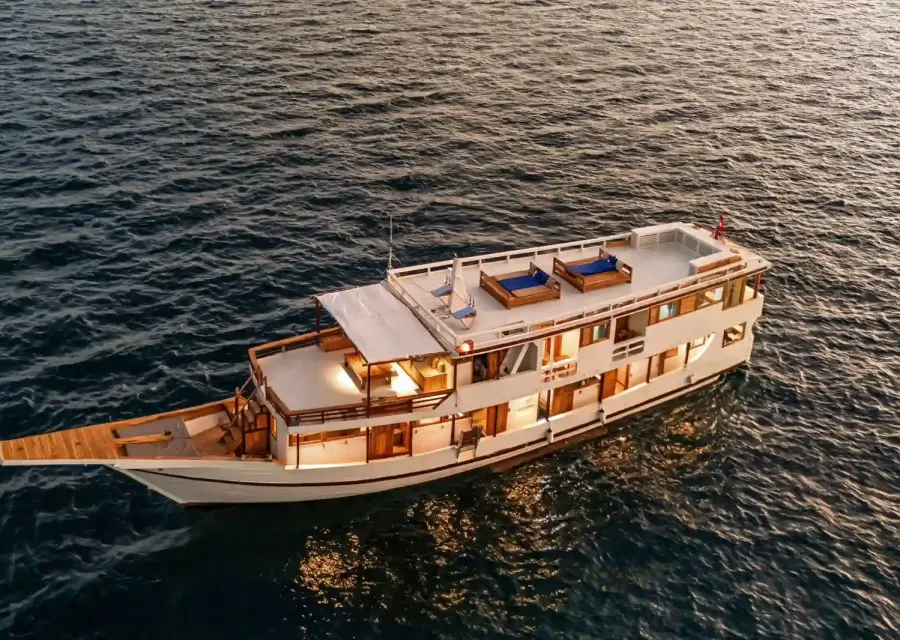
Ayvara is a VIP-class wooden phinisi with seven above-deck, air-conditioned, sea-view cabins for up to 15 guests, owned and operated by Komodo Luxury. Its open trip follows one fixed pattern: weekend departures from Friday to Sunday and weekday departures from Monday to Wednesday, every week of the year.
The 2027 calendar lists sailings on 5–7 and 8–10 February, for instance, just as it does on 6–8 and 9–11 August.
The 2027 publish rates (rate sheet dated 11 September 2026) are listed by cabin type, not by month. Per person, per 3D2N voyage:
- Superior Cabin: IDR 6,750,000 (USD 450)
- Deluxe Cabin with private balcony: IDR 7,750,000 (USD 530)
- Master Cabin with private balcony: IDR 8,500,000 (USD 570)
Komodo National Park fees are not included and follow government regulations at the time of the trip. Komodo Luxury’s reservations desk confirms availability and the final invoice for a specific date. Full tables, including whole-boat private charter, are on the rates page.
For reservations made a year ahead, which suits July, August and the festive weeks, the published terms split payment into a 30% deposit, a further 20% 120 days before the trip, and the balance 30 days before departure.
How to book Ayvara: reservations are handled by Komodo Luxury, not on this site. Check dates and cabins on the Ayvara page at Komodo Luxury, or contact the reservations desk on WhatsApp +62 811-3823-875 or at sales@komodoluxury.com.
Choosing a month: a quick guide
- Driest weather: June to September.
- Dry weather with fewer boats: May, June, September and October.
- Green hills for the Padar sunrise trek: April and May, straight after the rains. Komodo Luxury’s Padar Island page describes the climb.
- Quietest anchorages: November to March, apart from the Christmas and New Year weeks, and with the weather risk described above.
- School holidays: July, August and late December are the busiest weeks. Book well ahead.
Komodo Luxury’s Komodo National Park guide covers the park’s main stops, with a map of distances from Labuan Bajo.
Frequently asked questions
What is the best time to visit Komodo Island?
The dry season, from about April to October, is the best time to visit Komodo Island, with the least rain from June to September. May, June, September and October pair largely dry weather with fewer boats than the July and August peak.
Can you visit Komodo Island in January?
Yes, but January and February are the wettest months in Komodo, with frequent strong winds and rough seas. The Labuan Bajo harbourmaster can suspend tourist sailings when the weather agency BMKG warns of high waves, as happened in January 2026, so travellers should allow spare days and consider insurance that covers weather disruption.
Is the Komodo open trip available in the rainy season?
Ayvara's published calendar lists 3D2N open-trip departures every week of the year, Friday to Sunday and Monday to Wednesday, including the rainy-season months. Each sailing remains subject to weather and port clearance, and the published terms treat weather as force majeure that may change or cancel a trip without refund.
When is the best time to see manta rays in Komodo?
Reef manta rays are present in Komodo National Park all year, according to research summarised by the Marine Megafauna Foundation. Some dive operators report the largest gatherings at Manta Point between about November and April, while Liveaboard.com rates the site most active from August to October. No month guarantees a sighting.
Is August too crowded in Komodo?
July and August are the busiest months in Komodo, so popular stops see more boats and trips book up early. The weather is dry and sunny, and travellers who want similar conditions with more space often choose June or September instead.
Sources
- climatestotravel.com
- en.wikipedia.org
- en.wikipedia.org
- responsiblevacation.com
- heybali.info
- marinemegafauna.org
- dragondivekomodo.com
- samaraliveaboard.com
- liveaboard.com
- casadecapulet.com
- Vessel facts and rates: Komodo Luxury, Ayvara page and the 2027 rate sheet dated 11 September 2026